
Meanwhile the largest and best-funded segment of the market keeps growing — and remains underserved.
Americans age 50+, growing by more than one million people each year.
Share of U.S. household consumer spending from households headed by someone 50+.
Year-over-year growth in fitness-facility members age 65+ — the fastest-growing cohort
Household wealth held by U.S. baby boomers — roughly half of all wealth in the country.
Federal Reserve, Distributional Financial Accounts
There is no finish line
A 62-year-old is often training to keep golfing, traveling and living independently — goals that do not end after one event.
They are buying capability, not aesthetics
The value conversation changes when the alternative is loss of independence, avoidable injury or giving up activities they love.
They fill your dead hours
Many older clients prefer mid-morning and early afternoon — the space between the early and evening rush.
One client becomes a referral channel
Stable social networks — neighborhoods, golf, pickleball, faith communities and clubs — make results travel quickly by name.
The expertise is defensible
Generic programming is becoming easier to automate. Training a 68-year-old with a real health and orthopedic history requires judgment, adaptation and trust.
Two sessions per week at $70 — for five months.
Two sessions per week at $120 — for thirty months.
Illustrative only. Substitute your own rates and retention — the business model changes when clients stay for years instead of a season.
Industry data points the same direction: members age 65 and older have the lowest churn rate of any age group, at roughly 26% a year, against about 54% for adults 18 to 24.
We modify methods built for younger clients instead of understanding how a client’s needs change with age. Trainers typically default to one of two practices.
Flare-ups, setbacks and a client who concludes exercise is not for them anymore.
Permanent warm-up mode. Nothing adapts, nothing improves, and capable adults feel managed rather than trained.
Adaptation is still on the table
Muscle, strength and endurance decline with age — but meaningful adaptation remains possible with the right programming.
Power fades faster than strength
Power and elasticity decline faster than raw strength, and they are what catch a stumble or lift someone out of a chair.
Readiness changes day to day
Sleep, medication, blood pressure, joints and recovery all move. The plan has to adapt in the moment.
Balance belongs in the program
Balance and reactive capacity are trainable qualities, not accessories bolted onto the warm-up.
Not a senior-fitness add-on. Not a general certification with a chapter on arthritis. A complete method built around what changes with age — and what can be trained back.
– Physiology of aging performance: speed, power, balance and elasticity
– Functional-capacity and daily-readiness assessment protocols you can run on the gym floor
– Progression and regression frameworks for real bodies with real histories
– A holistic system connecting training, recovery, readiness and progression
Most certifications end when the test does. This one comes onto the floor with you — twelve months included, for when you need an answer now.
We focused on developing a scientifically proven training method for the aging population long before the industry decided longevity was a priority. It has been the focus of our practice for more than thirty years, across thousands of clients.
What we teach is what we use, every day, in our own facility.
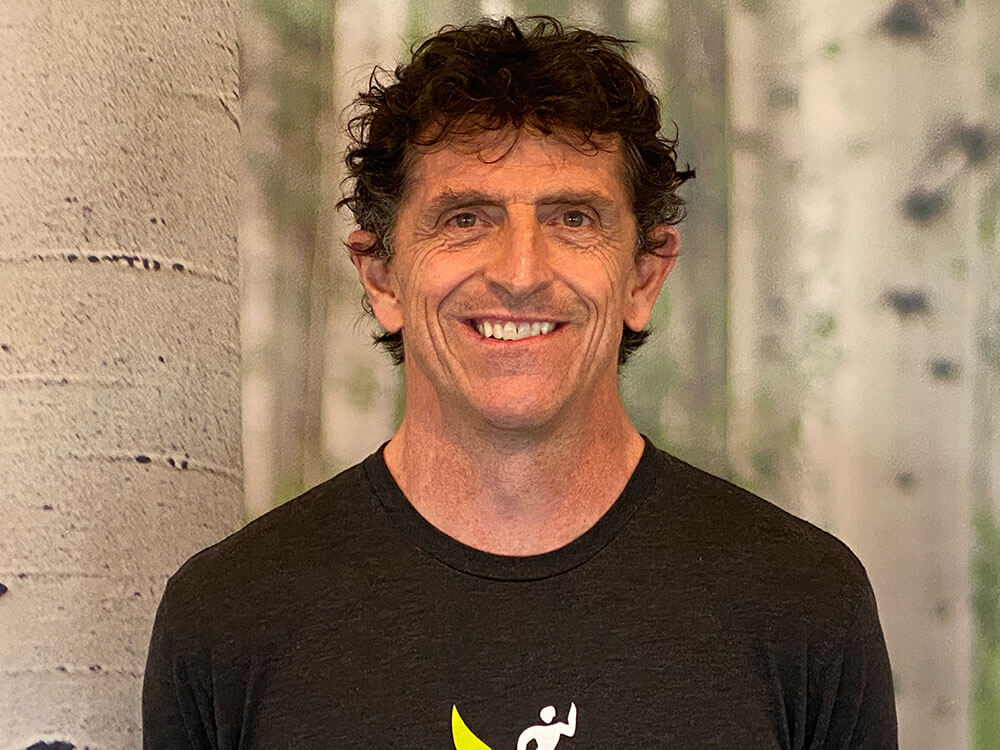
Paul holds a master’s degree in gerontology from Ball State University, completed aging-focused work at Tufts University and the Hebrew Rehabilitation Center, and has logged more than 60,000 personal-training hours.
Why gerontology matters: older-adult training is not general fitness at a lower intensity. Gerontology provides the lens for how function, recovery and readiness change with age — and what can still be improved.
– MA Gerontology, Ball State
– CSCS, NSCA
– 60,000+ training hours
– Age Performance founder
Become the trainer people over 50 in your community look for — with longer client relationships and expertise that is hard to copy.
Take the clients your colleagues are not equipped to serve well, and fill the mid-morning and early-afternoon hours most schedules leave open.
Give your facility a genuine point of differentiation in one of the largest underserved populations in fitness. Ask us about certifying a group.
Tell us a little about your practice and we will send you the full curriculum outline, pricing and current enrollment dates — and answer any questions before you commit.